Developing Food Service Technology Skills
In an exciting development, researchers at the Sant'Anna School of Advanced Studies and Electrolux Professional have created a comprehensive dataset to help improve cooking techniques and equipment design. This groundbreaking dataset offers insights into the biomechanics of flipping food on a grill, a common yet often overlooked aspect of culinary art.
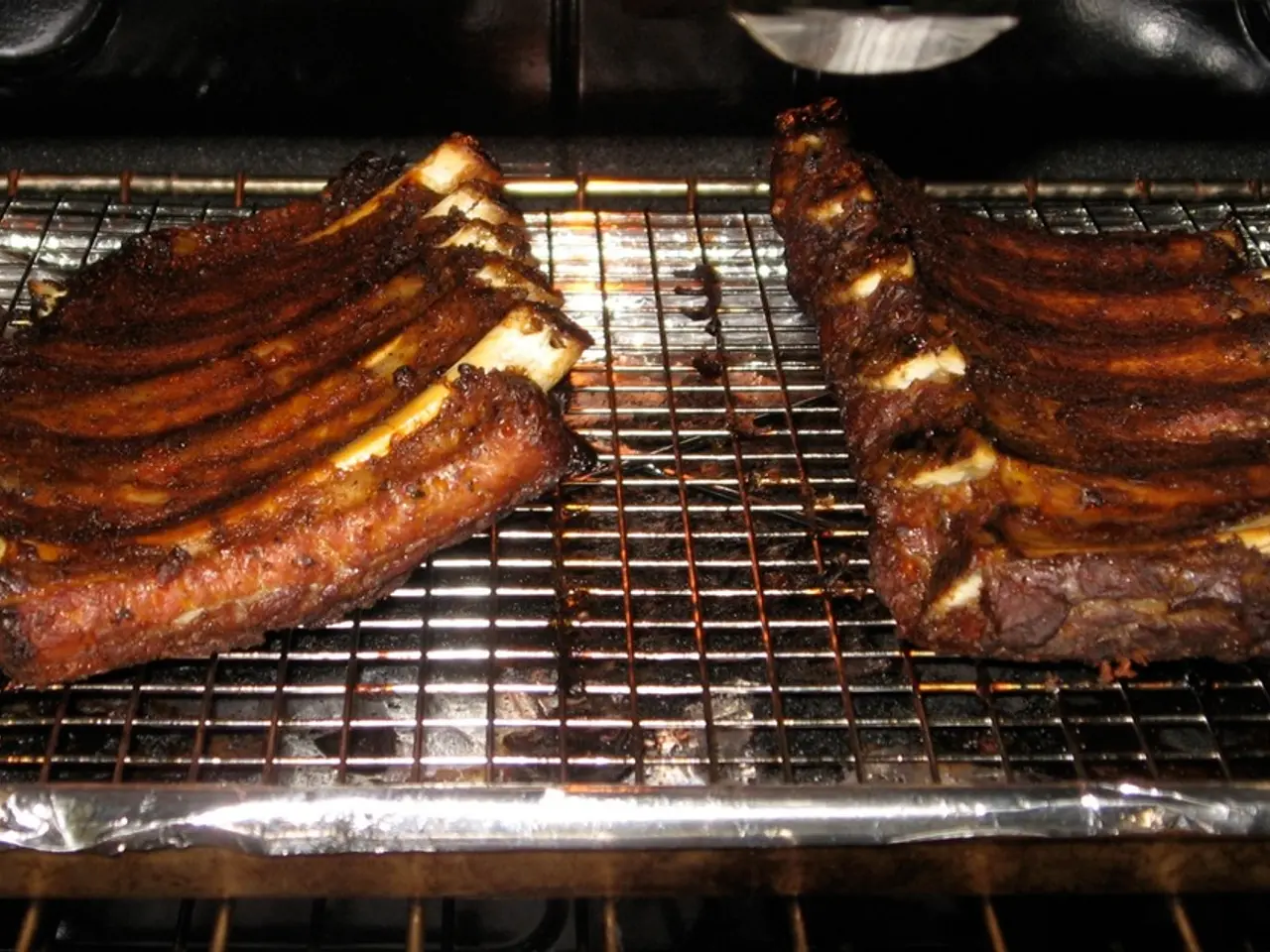
The data collection process was meticulously documented by Flickr user Ginny, providing visual evidence of the intricate process. Sensors were attached to utensils, measuring motion, force, torque, and temperature, while motion capture cameras and a wearable eye tracking headset were used to film the cooks while they flipped food.
The dataset includes a wealth of information, detailing the food, utensil types, force and torque applied to utensils, and each chef's pose and eye gaze. It contains data on 2,866 flipping motions made by nine cooks, including four restaurant chefs and five home cooks.
This dataset is a valuable resource for those interested in understanding the dynamics of flipping food on a grill. However, it is not publicly available through direct search results. To access this dataset, potential users can check the official websites or research portals of Sant'Anna School of Advanced Studies and Electrolux Professional, search for associated research publications or project pages, contact the researchers or institutions directly, or explore open data repositories or platforms used by academic projects.
Given the unique collaboration between Sant'Anna School and Electrolux Professional, contacting their research offices or checking their announcements might be the best route to access this valuable dataset.
The ai-driven data analysis in data-and-cloud-computing technology can be leveraged to delve deeper into this vast dataset, offering novel insights for research on cooking techniques enhancement. Researchers may consider collaborating with technology firms to perform advanced analyses on the collected data, potentially leading to innovative equipment designs based on the insights gathered.
By immersing themselves in this carefully curated dataset, we can expect the convergence of data science, technology, and culinary art to reshape the future of cooking equipment and techniques.