
Developments in Internet of Things (IoT) for Eco-friendly Agriculture
In the world of modern farming, technology is playing an increasingly significant role, particularly in sustainable practices. One such technology making waves is the Internet of Things (IoT) sensors, which are transforming crop management for the better.
Precision Agriculture: A Step Towards Sustainability
IoT sensors are revolutionizing farming by enabling precision agriculture. This innovative approach aims to maximize productivity while minimizing resource use and environmental harm. By providing real-time data on soil conditions, weather, crop health, and environmental factors, farmers can make timely and precise decisions about when to irrigate, fertilize, or apply pesticides. This precision leads to better crop yields and quality, while conserving resources and reducing environmental impact [1][5].
Enhanced Decision-Making and Resource Optimization
Sensors continuously monitor factors like soil moisture, nutrient levels, pH, and temperature, allowing for dynamic adjustments in farming practices [1][3]. By applying water and inputs only where and when needed, IoT devices help reduce waste of water, fertilizers, and pesticides, lowering costs and environmental footprint [1][3][5].
Crop Health Monitoring and Disease Detection
IoT systems also enable early identification of crop stress or disease through data analytics and sometimes integration with drones or satellite imaging. This contributes to better yield predictions and timely interventions [2][4].
Long-Term Scalability and Sustainability
Technologies like LoRaWAN offer low-maintenance, long-range sensor networks that can cover extensive areas cost-effectively, making it feasible to adopt sustainable practices at scale [3].
Data-Driven Insights through Machine Learning
Combining sensor data with analytics improves understanding of crop conditions and leads to optimized farming strategies and yield improvement [2].
In summary, IoT sensors empower sustainable farming by providing the continuous, real-time monitoring and data analytics necessary for efficient, eco-friendly crop management strategies [1][2][3][5].
The Future of Smart Agriculture
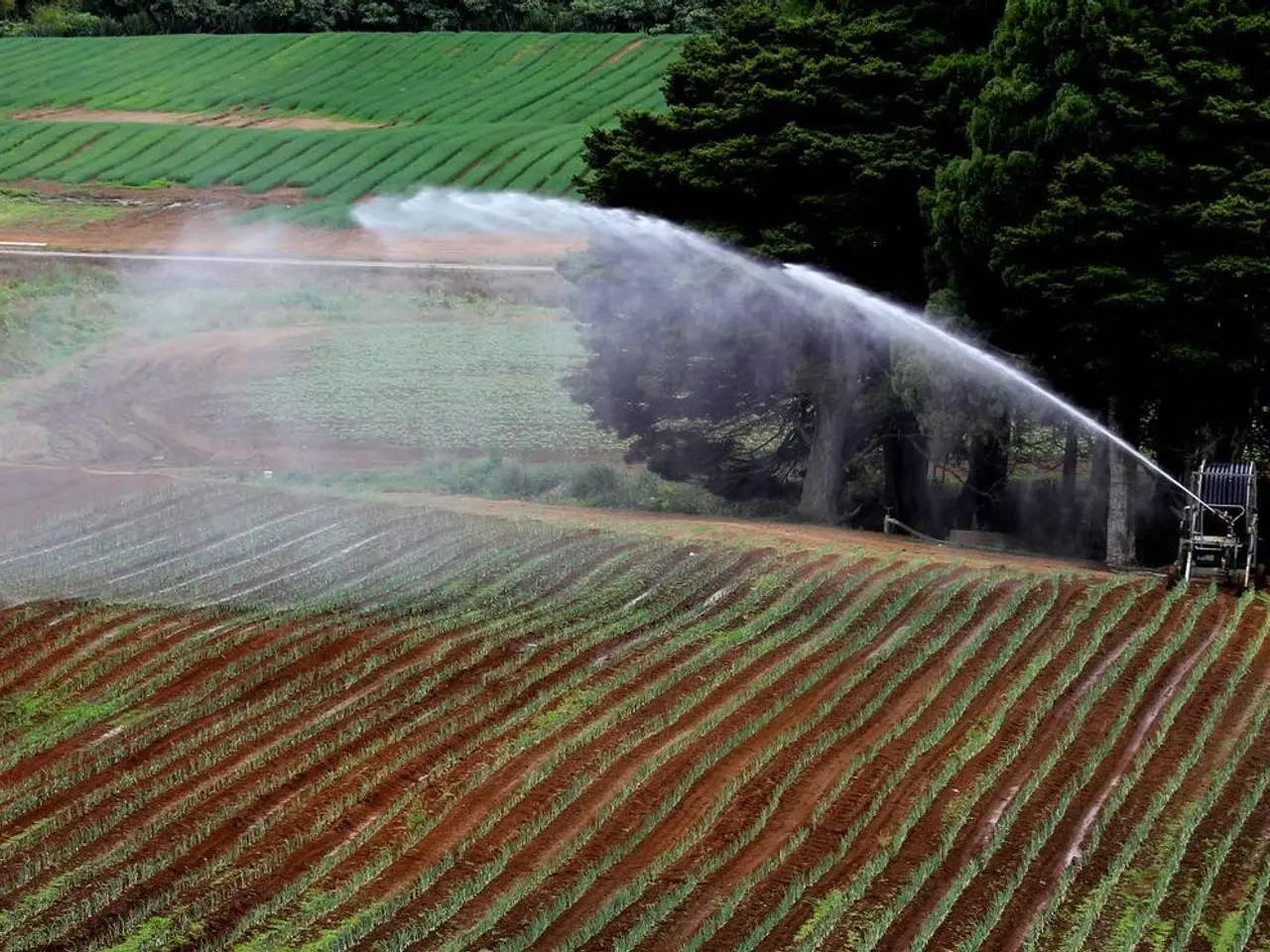
The future of agriculture is promising, with advancements in IoT applications for sustainable farming practices. From smart irrigation systems to drones for crop monitoring and soil health sensors, the potential for conservation and efficiency is vast.
Farmers can also take steps to reduce their carbon footprint, such as switching to electric machinery or adopting renewable energy sources. By analysing weather patterns, they can prepare for extreme conditions and adjust crop choices based on climate data.
In conclusion, IoT sensors are playing a pivotal role in the shift towards sustainable farming. By relying on real-time data, farmers can grow healthier crops, save resources, and manage their farms with greater precision. The data collected from these devices is a powerful tool in the fight against climate change, offering a promising future for both farmers and the environment.
- Harnessing renewable energy sources like solar or wind power can further reduce the carbon footprint of farming operations, contributing to a more sustainable future.
- The advancements in technology for smart agriculture also include the integration of environmental science and science, which could help in monitoring climate-change effects on crop health and aid in the development of more resilient farming practices.




%20for%20Eco-friendly%20Agriculture)