Drones Providing Package Delivery as a Service Offering
The realm of Drone-as-a-Service (DaaS) is poised for growth, with BVLOS flights being a key factor. However, implementing BVLOS operations faces several challenges that require careful navigation.
The main hurdles include regulatory uncertainties, safety technology development, airspace management, and compliance issues. The Federal Aviation Administration's (FAA) waiver process for BVLOS operations has been slow, causing delays for operators seeking routine BVLOS flights. Missed deadlines for issuing comprehensive BVLOS regulations, such as the FAA Reauthorization Act mandate and executive orders urging faster action, have limited large-scale BVLOS adoption.
Safety and technical issues also pose significant challenges. Replicating the human pilot’s "see and avoid" capability remains the primary technical hurdle. Reliable and affordable detect-and-avoid (DAA) systems are needed to detect other aircraft, obstacles, and terrain hazards to ensure safe BVLOS operations. These systems must meet stringent regulatory standards but remain complex and expensive.
Airspace management and risk zones also present complexities. Integrating drones safely with manned aviation, especially near heliports, urban hotspots, and critical infrastructure, increases collision risks. Issues like incomplete Remote ID compliance and removal of geofencing further complicate situational awareness and safety enforcement.
Industry and stakeholder concerns also play a role. While drone technology providers and sectors like agriculture and delivery welcome BVLOS expansion, groups such as general aviation and privacy advocates have concerns over increased traffic, surveillance risks, and accident potential.
NASA is playing a crucial role in addressing these challenges. They support the development and validation of DAA systems that meet regulatory safety standards, participate in independent safety case verifications, and contribute to ASTM standards for strategic conflict detection and deconfliction. NASA also assists in data collection and operational testing to provide the FAA with sufficient safety assurances needed to transition from case-by-case waivers to routine BVLOS operations.
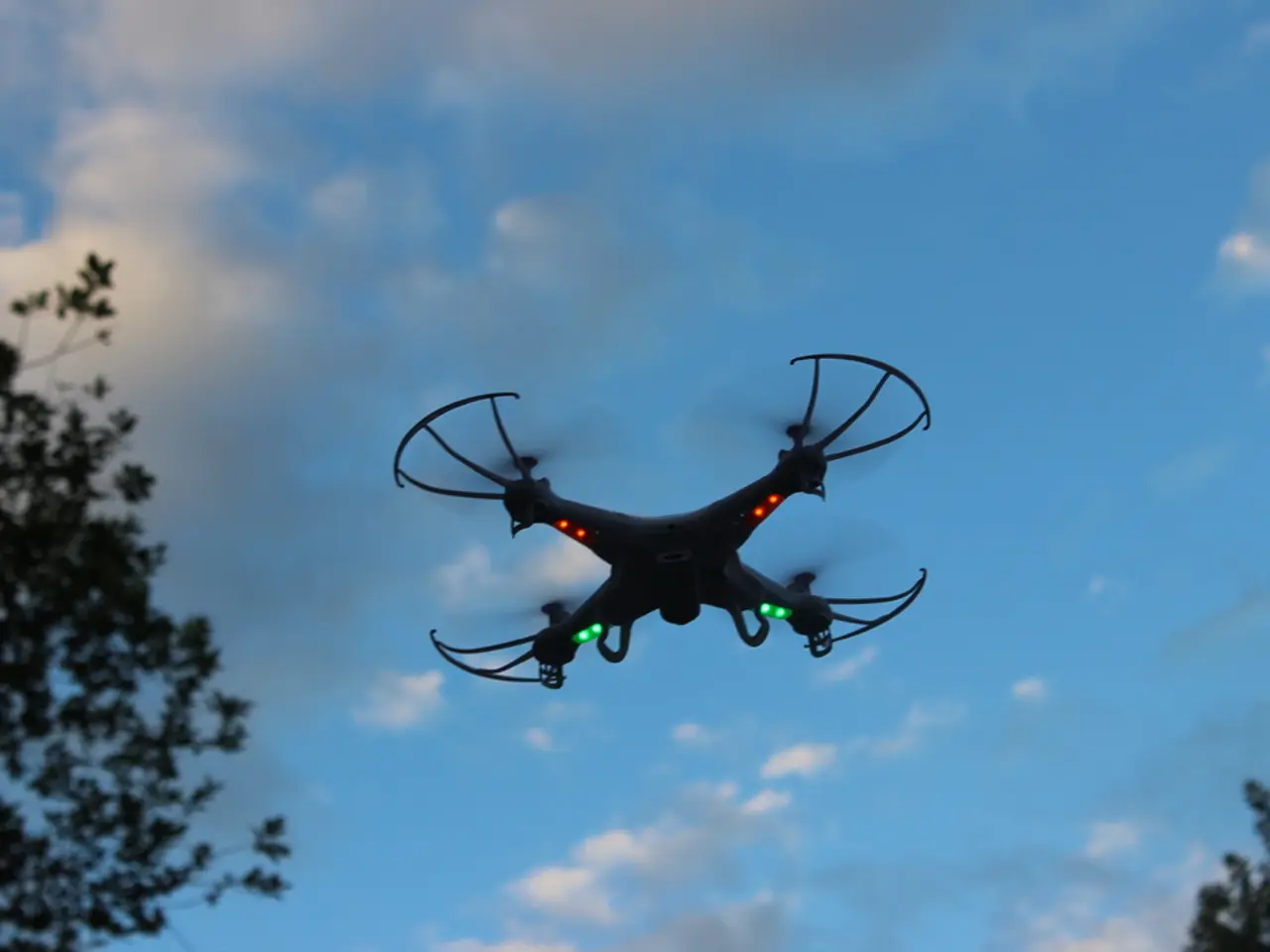
The future of DaaS extends beyond delivery services. Drones can be used for various applications, including agriculture, wildlife conservation, environmental monitoring, and search and rescue operations. Drones can collect key information about particular regions using dedicated imaging sensors. In the automotive industry, the use of drones for last-mile delivery is a growing trend.
Drones offer several advantages over traditional aerial vehicles. They are smaller, cheaper, and more versatile, making them suitable for various applications such as data collection and aerial photography. The Federal Aviation Administration (FAA) requires participating companies to adhere to Part 135 certification for drone commercial flights.
Innovations in the DaaS sector are evident. For instance, NASA's MK30 drone has been given FAA approval to begin delivery operations, including flying beyond visual line of sight. Amazon is beginning drone deliveries in the West Valley of the Phoenix Metro Area in Arizona for eligible items weighing five pounds or less. Customers living near the "Same-Day" site in Tolleson, Arizona can receive drone deliveries in less than an hour.
Drones in DaaS can be autonomous, semi-autonomous, or remote-controlled, depending on the application and service. Among DaaS's features are rapid deployment, on-demand access, and real-time tracking. Scholars have been exploring drone last-mile delivery using multiple research lenses, including consumer perceptions, drone routing problems, and the impact of drone delivery on sustainability.
In summary, BVLOS implementation faces regulatory, safety technology, and operational integration hurdles. NASA addresses these through research, technology validation, and partnerships aimed at enabling safe, scalable BVLOS drone operations within evolving FAA frameworks. The future of DaaS promises exciting possibilities, with drones poised to revolutionise various industries.
References:
- FAA Reauthorization Act of 2018
- FAA Modernization and Reform Act of 2012
- Executive Order 13795
- NASA's Unmanned Aircraft Systems Traffic Management (UTM) project
- FAA's BVLOS waiver process
- The development of reliable and affordable detect-and-avoid (DAA) systems is crucial in ensuring safe Beyond Visual Line of Sight (BVLOS) drone operations, a key challenge in the implementation of Drone-as-a-Service (DaaS).
- The future of DaaS goes beyond just delivery services, with drones set to revolutionize various industries such as agriculture, wildlife conservation, and environmental monitoring, thanks to ongoing innovations and collaborative efforts between researchers, technology providers, and regulatory bodies like the Federal Aviation Administration (FAA).