
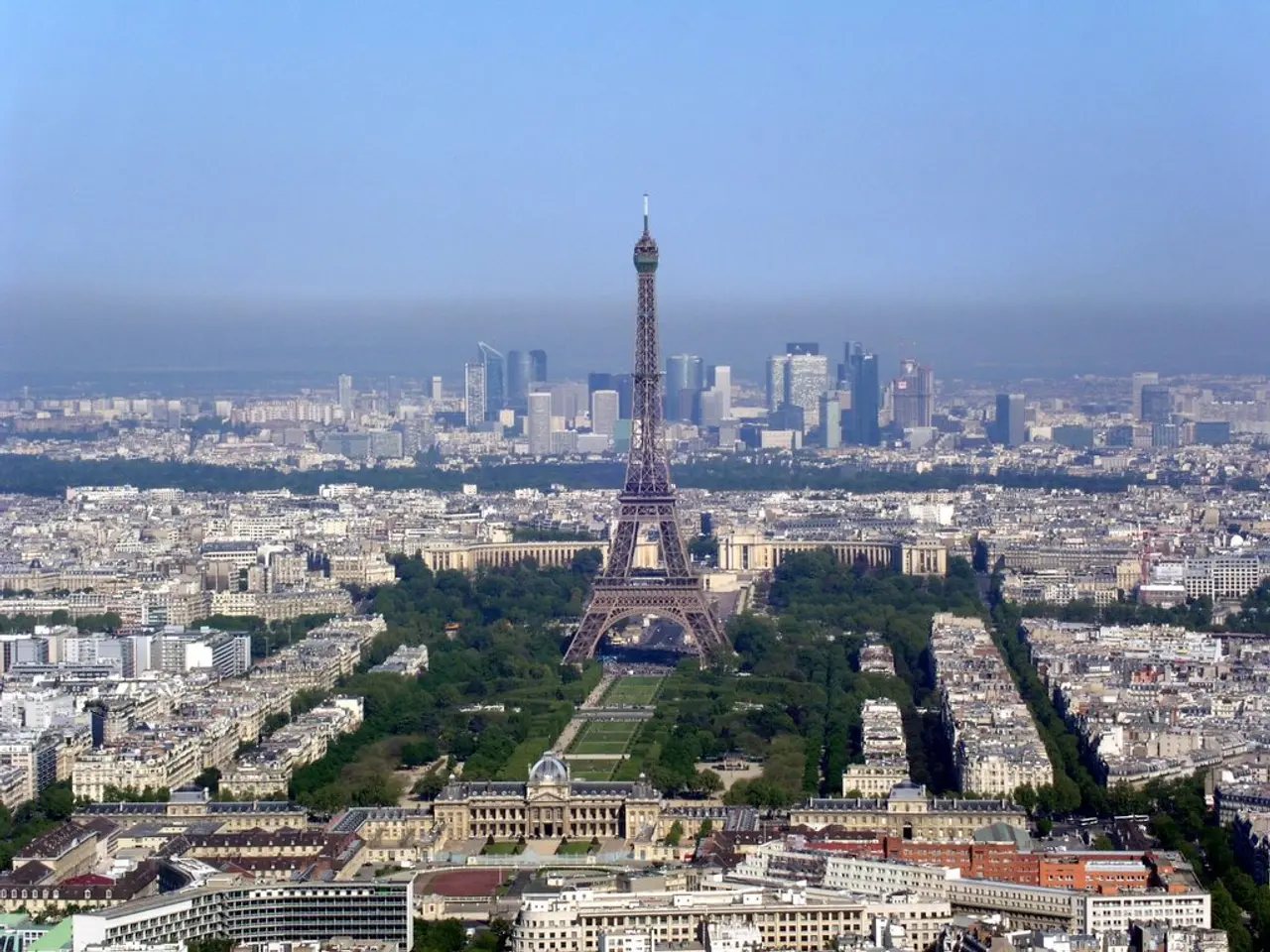
Expanding in the warmer months, the iconic Eiffel Tower experiences growth in its overall height.
The iconic Eiffel Tower, standing tall at 324 meters and boasting a unique lattice structure composed of iron beams, is not just a static symbol of Paris but a dynamic architectural masterpiece that responds to the forces of nature. One of the most fascinating aspects of this iconic landmark is its seasonal height variations, a phenomenon primarily governed by the principles of thermal expansion and contraction.
Constructed with puddled iron, a material that expands when heated and contracts when cooled, the Eiffel Tower's height changes are a natural physical response to temperature changes. This fundamental principle of thermal expansion in materials science is the primary factor contributing to the tower's seasonal height changes.
When the summer heat intensifies, the Eiffel Tower experiences growth, stretching up to about 15 centimeters (6 inches) taller than its official height. Conversely, during colder months like winter, the iron contracts, and the tower returns to its normal height. These fluctuations showcase not only the tower's physical dimensions but also the human experiences associated with its dynamic nature.
The tower's engineers, led by Gustave Eiffel, accounted for this thermal expansion in the design, allowing the structure to flex safely without damage as temperatures vary throughout the year. Seasonal temperature swings in Paris, ranging from averages around 3°C (38°F) in winter to about 19°C (66°F) in summer, cause these metal expansions and contractions.
During heat waves, the tower not only slightly increases in height but may also tilt slightly, although this does not affect its structural integrity. Engineers and scientists monitor temperature fluctuations to predict and understand how the Eiffel Tower responds to different environmental conditions.
To ensure the tower's continued safety and structural integrity, engineers may implement targeted structural reinforcements, modifications, or incorporate materials with enhanced temperature-resistant properties. Scheduled inspections are conducted to assess the overall condition of the Eiffel Tower, including visual inspections, material testing, and assessments of the structural components to identify any signs of wear, corrosion, or fatigue.
Advanced sensor technologies, infrared thermography, Global Navigation Satellite System (GNSS), and historical data analysis are employed to monitor the Eiffel Tower's responses to environmental factors, particularly temperature-induced changes. The Eiffel Tower's ability to grow taller in the summer, driven by thermal expansion, adds an extra layer of fascination to its already rich history and architectural significance.
Many structures, including bridges, skyscrapers, and other large-scale constructions, exhibit similar variations in response to temperature changes. Understanding the Eiffel Tower's seasonal height variation is essential for the fields of architecture, engineering, and material science, showcasing the importance of considering environmental factors in the design and maintenance of structures, especially those of historical and cultural importance.
The Eiffel Tower's base, measuring 125 meters on each side, stands as a testament to the tower's grandeur. The tower's dynamic nature serves as a reminder that even the most seemingly static and enduring monuments are subject to the forces of nature, enriching our understanding of the built environment.
[1] [Historical records document the Eiffel Tower's height variations across different seasons, providing valuable insights into its dynamic nature over the years.](https://www.parisinfo.com/en/discovering-paris/monuments-and-historical-sites/monuments/the-eiffel-tower/history)
[2] [Understanding the Eiffel Tower's seasonal height variation is essential for the fields of architecture, engineering, and material science, showcasing the importance of considering environmental factors in the design and maintenance of structures, especially those of historical and cultural importance.](https://www.sciencedirect.com/science/article/pii/S2214629619300715)
[3] [The Eiffel Tower's height can be broken down into three levels: the first at 57 meters, the second at 115 meters, and the third at the pinnacle.](https://www.parisinfo.com/en/discovering-paris/monuments-and-historical-sites/monuments/the-eiffel-tower/history)
[4] [There exist captivating anecdotes and documented observations of the Eiffel Tower's height fluctuations, showcasing not only its physical dimensions but also the human experiences associated with its dynamic nature.](https://www.atlasobscura.com/articles/eiffel-tower-expansion-and-contraction)
- The Eiffel Tower's height fluctuations, driven by thermal expansion and contraction due to seasonal temperature changes, have been documented over the years, providing valuable insights into its dynamic nature and offering a fascinating study in environmental-science, data-and-cloud-computing, and technology.
- By employing advanced sensor technologies, infrared thermography, Global Navigation Satellite System (GNSS), and historical data analysis, engineers and scientists can monitor and understand the Eiffel Tower's responses to various environmental factors, showcasing the resilience of the structure in the face of climate-change and the importance of technology in the preservation of such architectural wonders.
- As researchers continue to explore the tower's seasonal height variations and their impact on other large-scale constructions, the findings serve as a catalyst for further advancements in material science and technology, piquing the collective curiosity of those seeking to understand the interplay between nature and man-made structures.




