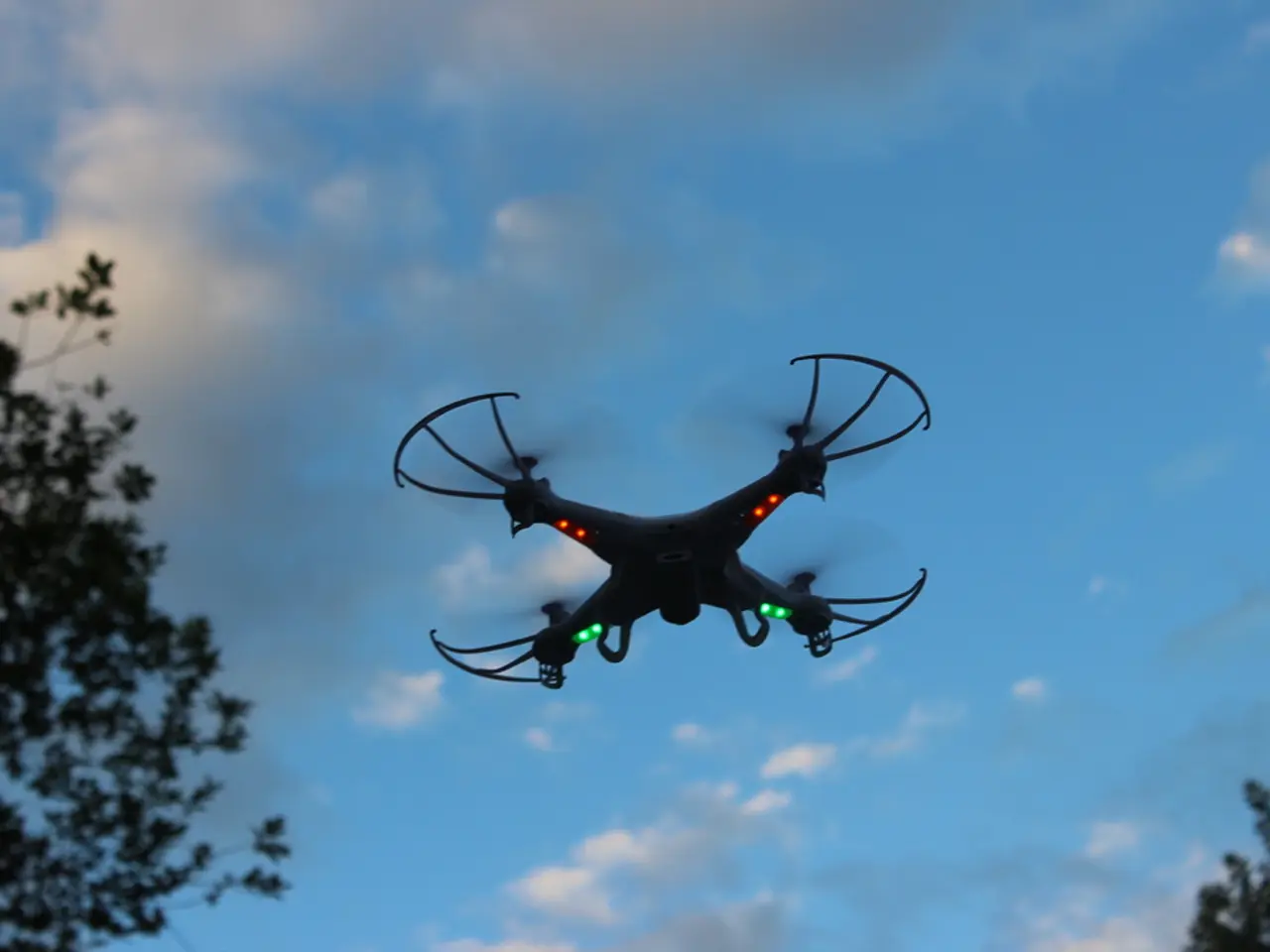
In the Nizhny Novgorod region, drones take on farming duties by dispersing fertilizers over fields.
In the Nizhny Novgorod region, a significant shift towards modern farming practices is underway as the state program "Unmanned Aerial Systems" initiates drone testing for agricultural use. This initiative, spearheaded by President Vladimir Putin, is part of a broader global trend towards smart farming technology.
The testing, taking place under special regulations, is being conducted with a focus on precision crop monitoring, efficient field mapping, and time-saving applications. Drones are capturing high-resolution aerial imagery, enabling early identification of crop stress, pest infestations, and nutrient deficiencies. This early detection allows farmers to take timely, targeted actions to protect their crops and optimize growth.
Drones are also generating detailed maps, including elevation and soil characteristics, which support precise planting, irrigation, and input application strategies tailored to specific field zones. By applying inputs like fertilizers and pesticides only where needed, drones promote healthier, more uniform crop growth across the field, leading to improved harvest quality and higher yields.
The use of drones significantly reduces the reliance on manual labor, quickly covering large areas—up to dozens of acres per day—and performing tasks like spraying in a fraction of the time traditional methods take. This is especially valuable where skilled agricultural labor is scarce.
Moreover, the targeted application based on drone data reduces unnecessary use of chemicals, cutting input costs and minimizing environmental pollution caused by overuse of pesticides and fertilizers.
Real-time data collection and decision support are other key advantages of drone technology. Combined with AI and machine learning, this data enables precise, data-driven decisions throughout the crop growth stages, enhancing overall farm management efficiency.
Future advancements in drone technology, such as integration of LiDAR sensors and autonomous operations, promise further gains in operational efficiency and sustainability in agriculture.
In addition to agricultural tasks, the drone project in Nizhny Novgorod is exploring various applications, including medical supply delivery. The testing is aimed at gathering data on the benefits and advantages of drone integration.
Each drone flight during the testing is conducted with safety in mind. Fertilizers are distributed across fields using drones, with high precision, covering up to a thousand hectares. The project employs modern technologies such as the calculation of the Normalized Difference Vegetation Index (NDVI) to assess soil and plant conditions.
The findings from these comparisons will help farmers choose the most profitable approaches for their work in the future. As the testing progresses, the press service of the Nizhny Novgorod region government is reporting on the project's developments, underscoring the region's commitment to innovative farming practices and sustainable agriculture.
Drones, as part of the smart farming technology, are being tested in the Nizhny Novgorod region for agricultural use. They are generating detailed maps and capturing high-resolution aerial imagery, which support precise planting, irrigation, and input application strategies, employing modern technologies such as the calculation of the Normalized Difference Vegetation Index (NDVI) to assess soil and plant conditions.
The use of drones promotes healthier, more uniform crop growth by allowing farmers to take timely, targeted actions, reduce unnecessary use of chemicals, cutting input costs and minimizing environmental pollution. Furthermore, drone technology is set to see advancements, such as integration of LiDAR sensors and autonomous operations, promising further gains in operational efficiency and sustainability in agriculture.