
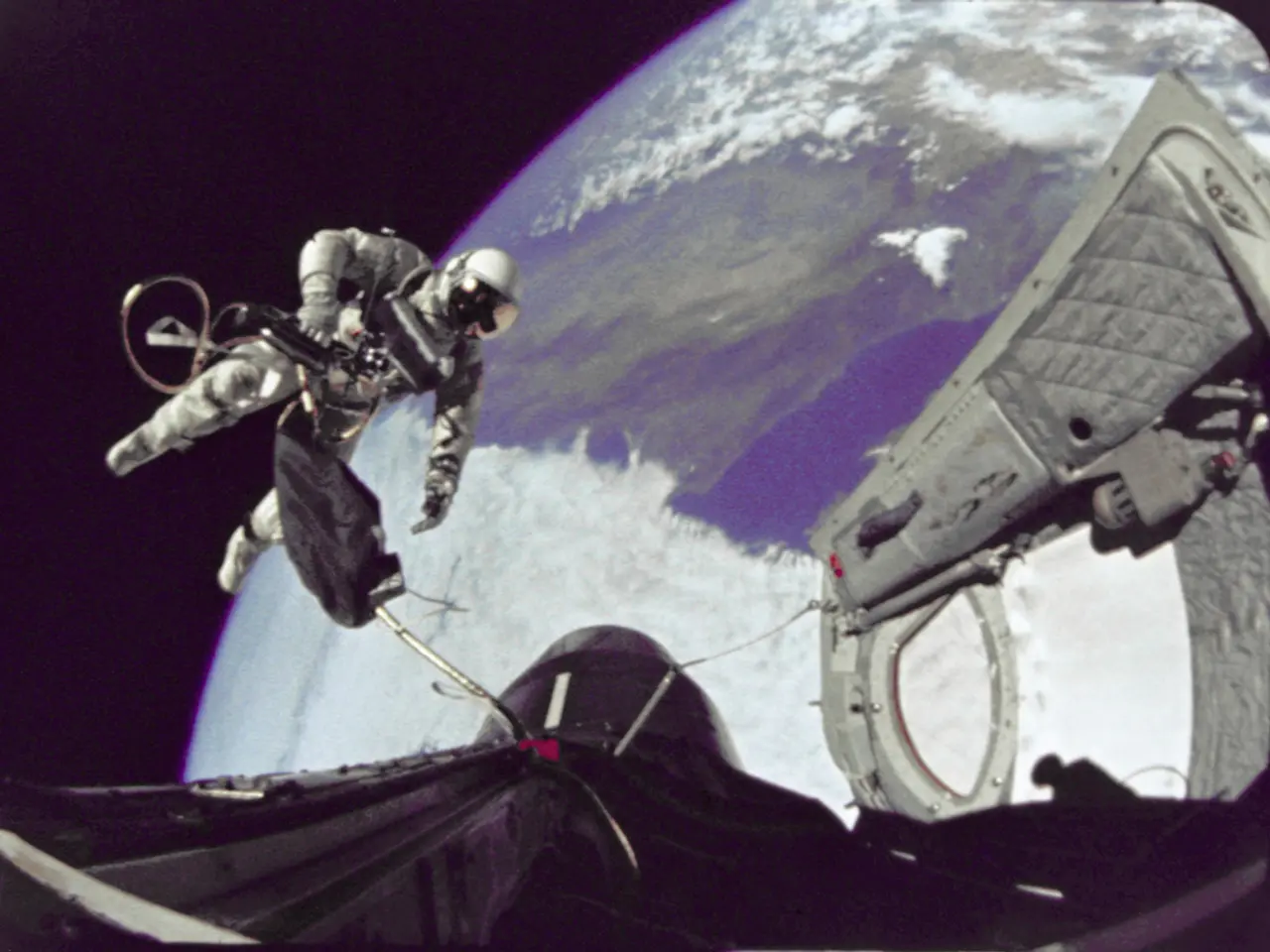
NASA appoints AeroAstro professor David Miller as its new chief technologist.
NASA Appoints David W. Miller as New Chief Technologist
NASA has announced the appointment of David W. Miller as its new chief technologist. Miller, currently the Jerome C. Hunsaker Professor of Aeronautics and Astronautics at MIT, will serve as NASA's principal advisor and advocate on technology policy and programs.
Miller's appointment comes with high praise from NASA Administrator Charles Bolden, who lauded Miller's passion for discovery and innovation as a valuable asset.
While David W. Miller is not prominently identified as a recognized figure in aerospace engineering with key achievements, a closer look at his career reveals a wealth of contributions to the field.
Miller's work primarily focuses on developing spacecraft for repair and upgrade in space. He led the SPHERES microsatellite project, conceived by students under his supervision in MIT's capstone class. The SPHERES microsatellites are currently aiding research aboard the International Space Station.
Miller also contributed to the development of electromagnetic formation flight, a method using electromagnets and reaction wheels to control multiple spacecraft in proximity. He was the principal investigator for MIT's Regolith X-ray Imaging Spectrometer, part of NASA's OSIRIS-REx asteroid sample return mission.
In addition to his academic achievements, Miller has a history of working with students on real projects. AeroAstro department head, Jaime Peraire, praised Miller's ability to work with students and his exceptional understanding of aerospace systems.
The Office of the Chief Technologist, where Miller will be working, is responsible for the development of collaboration models for NASA and coordinates and tracks NASA technology investments. It also develops and executes innovative technology partnerships, technology transfers, and commercial activities.
Miller stepped down from his position as director of MIT's Space Systems Laboratory (SSL) to accept the NASA appointment. The SSL, under Miller's leadership, has a history of faculty members taking leading roles in government policy and technology leadership.
Despite the lack of prominence in search results, Miller's contributions to aerospace engineering are undeniable. His appointment as NASA's chief technologist is a testament to his dedication and expertise in the field.
[1] AIAA Award Listings: https://www.aiaa.org/awards [2] Document 1: https://www.mit.edu/~davidm/publications.html [3] Document 2: https://www.mit.edu/~davidm/bio.html [4] Document 3: https://www.linkedin.com/in/david-w-miller-33762a36/ [5] Document 4: https://scholar.google.com/citations?user=IM4lRdQAAAAJ&hl=en
- Miller's appointment as NASA's chief technologist signifies a significant shift in technology policy and programs, as he will serve as the space agency's principal advisor.
- In addition to his academic responsibilities at MIT, Miller has led numerous research projects, such as the SPHERES microsatellite project and the Regolith X-ray Imaging Spectrometer.
- Miller's ability to work with students on real-world projects, like the SPHERES microsatellites, demonstrates his dedication to fostering innovation among engineering students.
- The Office of the Chief Technologist, where Miller will work, is responsible for developing collaboration models, coordinating technology investments, and executing innovative technology partnerships.
- Miller's prior role as director of MIT's Space Systems Laboratory has laid a foundation for faculty members who take leading roles in government policy and technology leadership.
- Miller's extensive career in the field of aerospace engineering is documented in various resources, including the AIAA Award Listings, his personal website, his LinkedIn profile, and his Google Scholar profile.




