
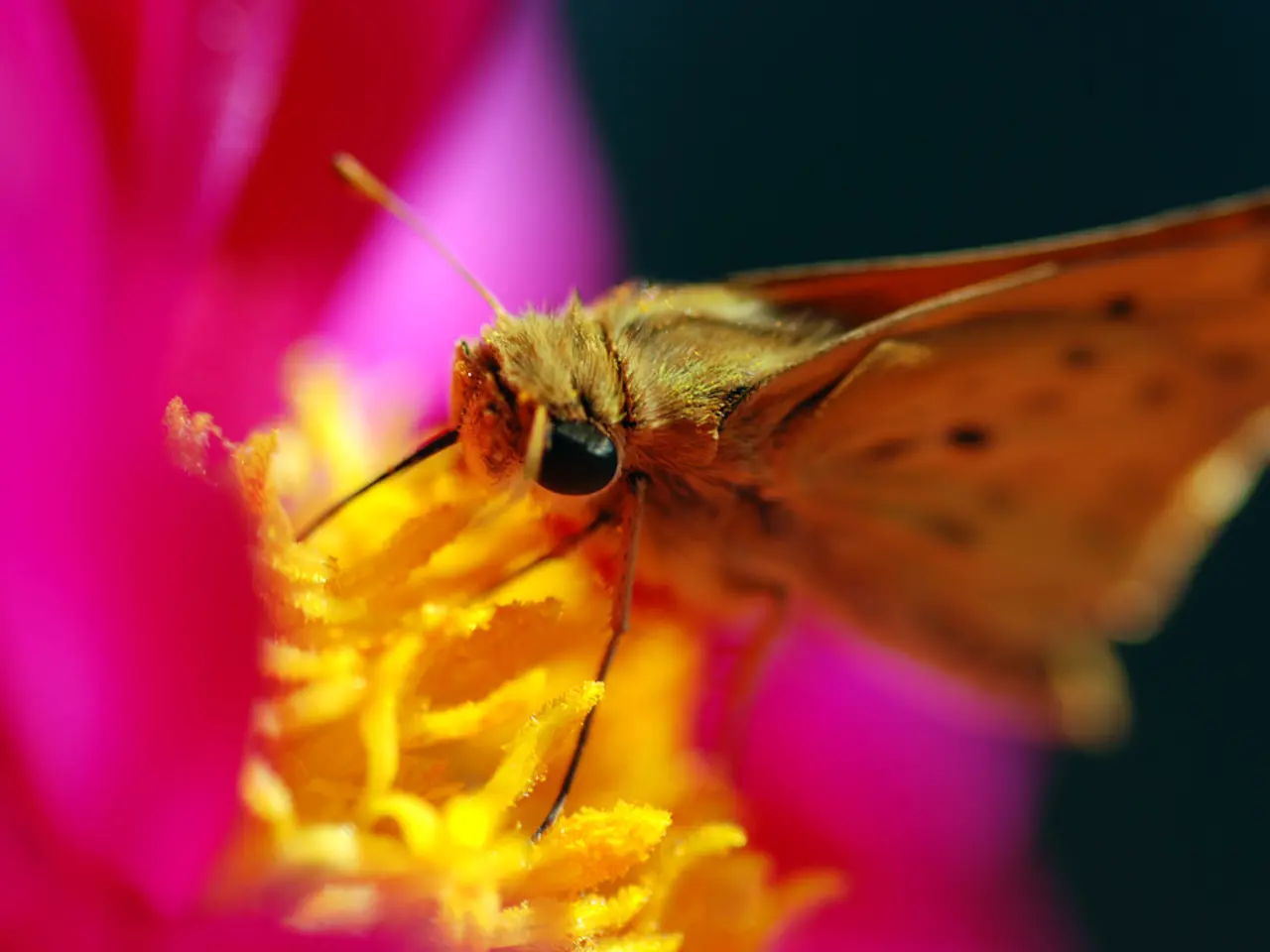
Repeating Patterns in Evolution: An Inquiry into Why Life Continuously Resembles the Past
Unveiling the Genetics of Butterfly Evolution: A Look into Heliconius Butterflies
In a groundbreaking study, scientists have delved into the mechanisms of convergent evolution in Heliconius butterflies, focusing on the impact of gene manipulation on wing patterns and colors.
The research, conducted on the postman butterfly (Heliconius sp.) and its smaller counterpart, reveals that the Optix gene plays a pivotal role in wing color pattern convergence. This gene, known for controlling red wing patterns associated with Müllerian mimicry, is central to the cis-regulatory evolution that drives convergent evolution of complex wing color patterns.
Manipulating such genes through gene knockout experiments has demonstrated that they can alter wing pattern and color, providing experimental evidence of their role in mimicry. This process is critical in signaling toxicity to predators and thereby contributes to mimicry and survival.
The study also suggests that convergent evolution in wing patterns is often a multi-step genetic process. Initial large-effect mutations establish a rough resemblance in wing pattern, followed by secondary smaller genetic changes that refine this mimicry. This pattern fits well with genetic regulation by one or few key genes, but can be complicated by the involvement of multiple genes for some wing patterns.
Furthermore, the research indicates that hybridization and introgression among closely related Heliconius species may accelerate convergent evolution by increasing genetic variation for wing pattern traits. This gene flow across species boundaries can contribute to rapid adaptive changes in mimicry rings that influence wing color patterns.
Convergent evolution, the independent evolution of a trait not present in common ancestors, resulting in similar descendant species, is a fascinating aspect of evolutionary biology. In the case of Heliconius butterflies, this phenomenon is enabling the butterflies to adaptively converge on similar wing patterns for predator signaling and mutual protection in mimicry rings.
Heliconius butterflies are renowned for their vibrant and intricate wing patterns, thought to signal their toxicity to potential predators and attract mates. Understanding the molecular and genetic mechanisms behind these patterns is the first step in unraveling how two distinct species evolve differently to achieve the same characteristics.
As researchers continue to explore these mechanisms, we can expect to gain a deeper understanding of the complex interplay between genes and evolution, shedding light on the intriguing world of convergent evolution.
For those interested in learning more about the predictability of evolution, articles can be found on the Evolution Tree website, a comprehensive scientific platform project that offers insights into the fascinating world of evolution. However, it's important to note that the continued existence of Evolution Tree depends on its ability to generate income, as it is the only job and source of income for its creators.
References:
[1] Concha, R., et al. (2021). Genomic basis of convergent evolution in Heliconius butterflies. Nature, 595(7869), 649-654.
[2] Carroll, S. B., et al. (2005). Molecular Evolution: A Very Short Introduction. Oxford University Press.
In the realm of evolutionary biology, the study of Heliconius butterflies uncovers how science intersects with medical-conditions like toxicity and mimicry, offering insights into genetic adaptations. Moreover, this research leverages technology, particularly gene manipulation and gene knockout experiments, to better understand the intricate relationships between genes and survival mechanisms in these vibrant creatures.