
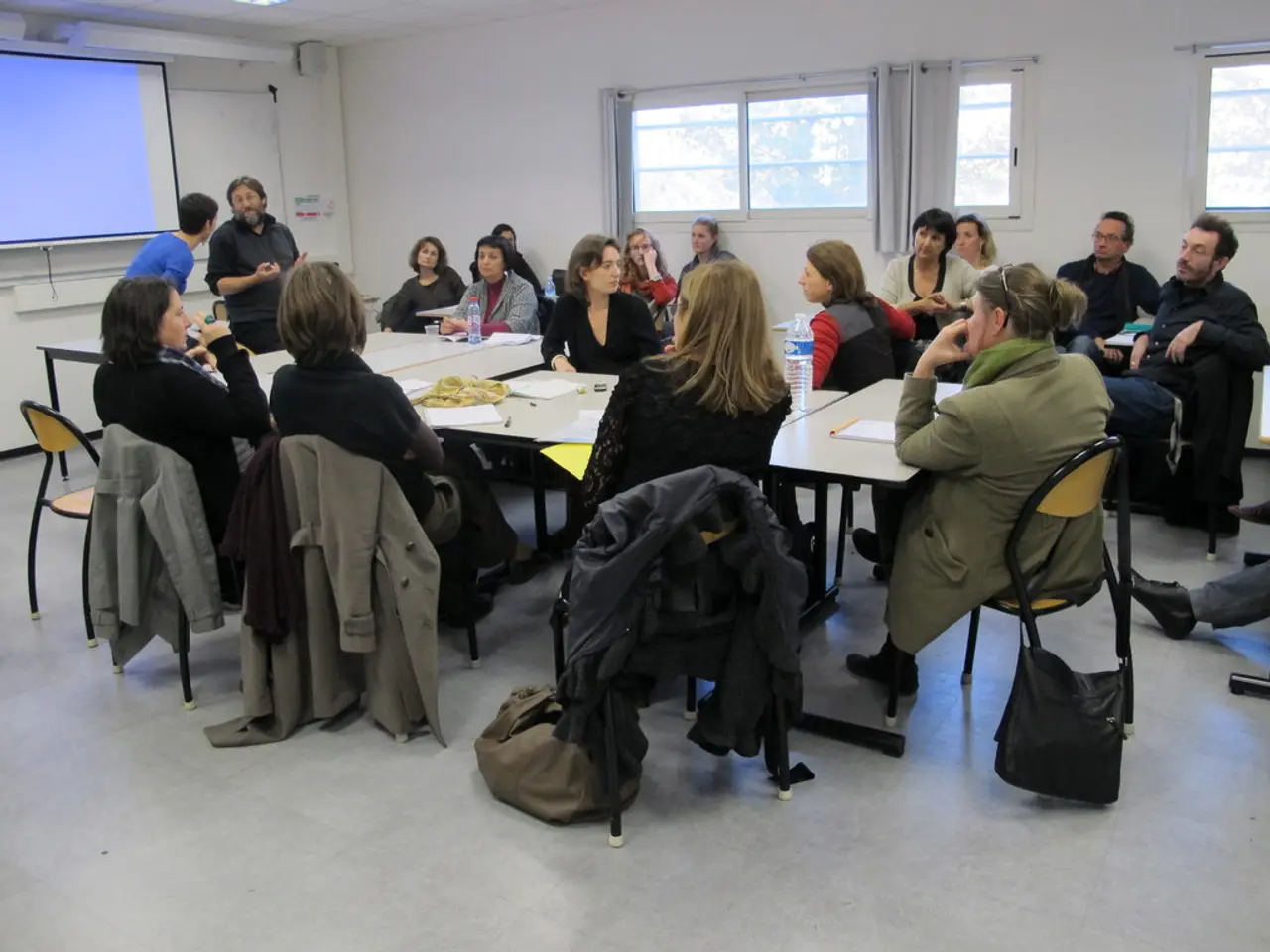
Working together with your colleagues on a research project
In the realm of research and development, company culture plays a significant role in determining the feasibility of collaborative research. Despite the potential resistance that may arise, especially in agile organizations, it is worth attempting to implement collaborative research for its numerous benefits.
A recent video discussion has shed light on the concept of team research and provided insights on how to make it less disruptive to the workflow. The video emphasizes that collaborative research can help in developing a more comprehensive research strategy, deepen customer understanding across teams, and avoid technical delays by surfacing potential issues early in the design process.
The discussion highlights several key methods for effectively implementing team research on agile teams.
- Iterative Research and Feedback Integration: Breaking down research into short cycles or sprints allows for continuous customer feedback to refine understanding and adjust work priorities. This approach reduces the risk of misalignment and technical surprises by validating assumptions early.
- Clear Role Definition and Collaborative Meetings: Defining roles like Product Owner and Scrum Master to maintain alignment on goals is crucial. Holding daily stand-ups for transparency and quick issue resolution can improve efficiency by up to 44%.
- Backlog Management and Prioritization: Maintaining a prioritized backlog focused on customer-value tasks is essential. Regular backlog refinement ensures evolving requirements are addressed promptly, helping to avoid overloading the team and accelerating delivery.
- Visual Task Tracking and Time Boxing: Using shared Kanban boards for clear visibility of tasks and their states can minimize duplication and handoff delays. Time-boxing research activities into focused blocks increases productivity and reduces wasted effort.
- Incorporate Behavior-Driven Development (BDD) and Early Testing: Integrating testing from the start with approaches like BDD can clarify expected behavior and catch issues early, preventing technical delays and improving collaboration between developers and testers.
- Close Stakeholder Collaboration: Engaging stakeholders regularly for feedback on research outputs and backlog priorities ensures research outcomes align with real customer needs and business goals.
By combining these practices, agile teams can enhance customer insight, maintain focus on high-value research outcomes, and reduce technical delays through early detection of issues and alignment across the team and stakeholders.
In conclusion, while resistance to collaborative research may exist in some company cultures, particularly in agile organizations, the benefits of implementing team research are undeniable. By adopting iterative, collaborative, and transparent practices, teams can improve their research processes, deepen their understanding of customer needs, and deliver high-quality products more efficiently.
- To ensure seamless collaboration between agile development and interaction design teams, the use of behavior-driven development (BDD) and early testing can help clarify expected behavior, catch issues early, and boost efficiency in delivering high-quality products.
- In agile organizations, incorporating finance and business perspectives during the collaborative research process can help prioritize research tasks based on customer value, thus improving the overall feasibility and success of a research project.